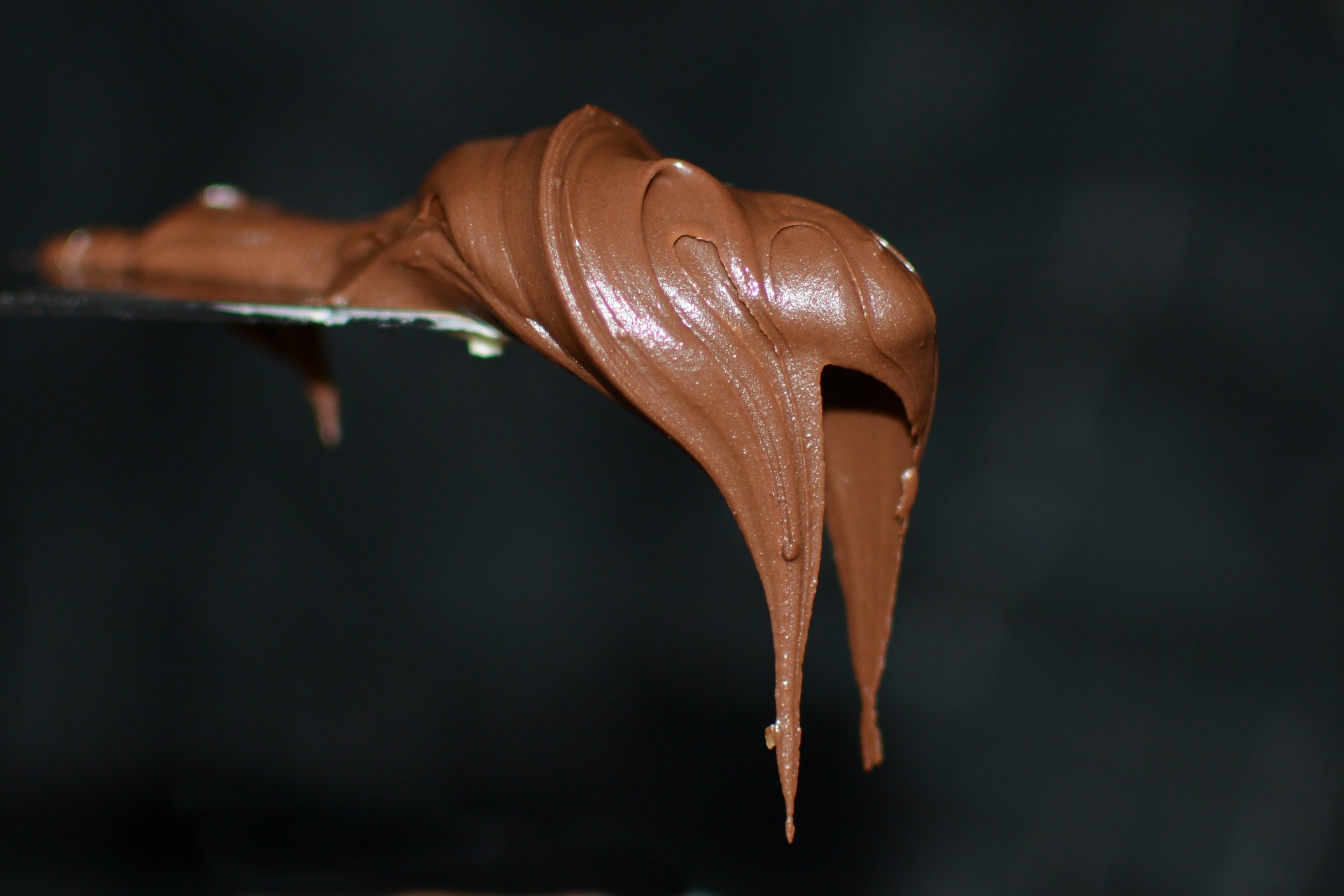
Say what you will about the tyranny of African warlords or the tyranny of a certain massive multi-company cartel, but diamonds have held the interest of humans for centuries. As a symbol of lasting love, they’re the most popular gemstone to be set in engagement and wedding rings. This has earned them the title “a girl’s best friend” for some reason. If social media and personal observation are any indication of how it really is, then it seems that Nutella and Pumpkin Spice Lattes are actually a girl’s best friend.
When a lot of copies of a record are sold, it’s known as a diamond album. If you find someone who is “nice once you get to know them”, they’re a diamond in the rough. Diamonds are a card suit. There was a Pokémon Diamond game. Why are people so obsessed with diamonds?
As it turns out, it’s for the same reason that raccoons love tin foil.
Here, we’ll talk about where diamonds come from, their rise as a status symbol over the years, and what makes them so irresistibly shiny.
The History
References to diamonds date back centuries. The ancient Indians, Chinese, Romans, and Arabs have all mentioned diamonds in texts, and describe the mystical qualities of the gemstone. Among these: giving victory to anyone who wears a diamond on their left arm, being good for the insane (and sleepwalkers), takes away a magnet’s ability to attract metals, and my personal favorite – that the hardness of a diamond can be ruined by smearing fresh goat blood on it. Apparently in antiquity, goat and lamb blood was analogous to duct tape or WD40. Just put that stuff on anything, and it’s fixed!
Today, mines in Africa, the US, Canada, Australia, Russia and India rip about 26 metric tonnes (about 28 tons, for my fellow Imperialists) out of the ground. In recent years, advances in technology have allowed perfect synthetic diamonds to be created in the lab. These diamonds, despite being visually identical to those that are naturally formed, are usually used in industrial settings as abrasives, accounting for 98% of the diamonds used in industry.
The How
Now onto the science bit of this.
Diamond is an allotrope of carbon, meaning that it is one of the forms in which pure carbon can exist. (Fun Fact: Graphite, another allotrope of carbon, is actually more stable than diamond at room temperature, so diamonds will spontaneously turn into graphite over time. A long long time. So really, diamonds aren’t forever. Sorry, everlasting love.) The carbon atoms are arranged in a crystal lattice structure called a diamond lattice, with atomic bonds strong enough to make it the hardest substance known to man. Because of this, diamonds are commonly used for cutting hard materials and are the only substance capable of cutting other diamonds. (Imagine having to cut your morning bagel with a knife made only from other bagels. Which in turn are cut from other bagels. Where does it end?! It’s just bagels all the way down.)
Though they’re commonly thought to be clear, only “perfect” diamonds are translucent. A number of colors can be created by impurities in the crystals, or by deformation or irradiation. Boron impurities create blue diamonds, nitrogen make yellow or brown, nickel or radiation cause diamonds to become green, and the rare purple diamond is caused by deformation of the crystal structure within the diamond. Other colors include pink, grey, black, orange, and red.
The reason that light seems to bounce around inside diamonds and radiate to your eye is because of a little something called total internal reflection. To understand it, we need to first understand light refraction.
The Physics
Many people know that the speed of light is a constant 299,792,458 meters per second, but that figure is specifically the speed of light in a vacuum (devoid of any air, material, etc.). The speed at which light travels through transparent materials or mediums is actually slower than that, and dependent on the material. The ratio between the speed of light in any material and the speed of light in a vacuum is called the index of refraction, denoted as 

,where 

When light travels from one transparent medium to another (and hence changes speed), it refracts. This means that the angle at which the light was traveling is changed, and this angle depends on the indices of refraction of the two materials. Refraction occurs because a portion of the light wave reaches the material first and is thus slowed before the rest of the wave hits, causing the wave to change direction altogether. The relationship that ties this all together is:

,known as Snell’s Law or the Law of Refraction. 

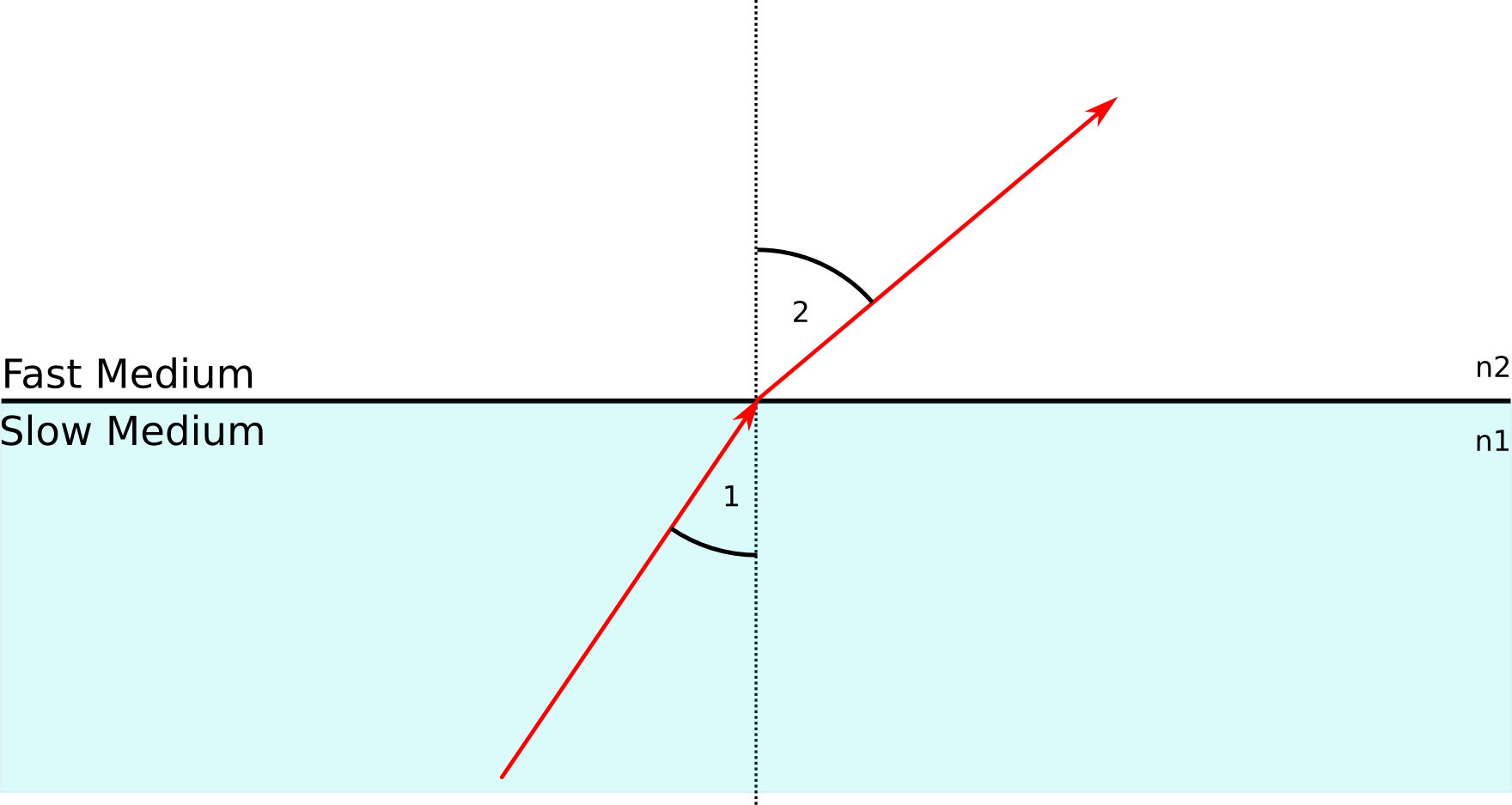
This is the reason that it’s hard to spear fish when you’re above the water; the fish is actually in a different position than it appears to be from above (unless you’re looking directly down at it). Remember that next time you’re spear-fishing.
If you’re crafty at math, you might realize that for a certain incoming angle, the resulting outgoing angle will be 0 degrees; the light will be refracted to align with the surface of the new material. This angle is called the critical angle. For any angle greater than this critical angle, the light will not refract through the new material, but instead will reflect back at the same angle. This phenomenon is called total internal reflection. It’s what allows light to travel through fiber optic cables and transmit information through flexible glass cables (crazy, right?). Jewelers take advantage of diamond’s high index of refraction and total internal reflection when cutting diamonds.
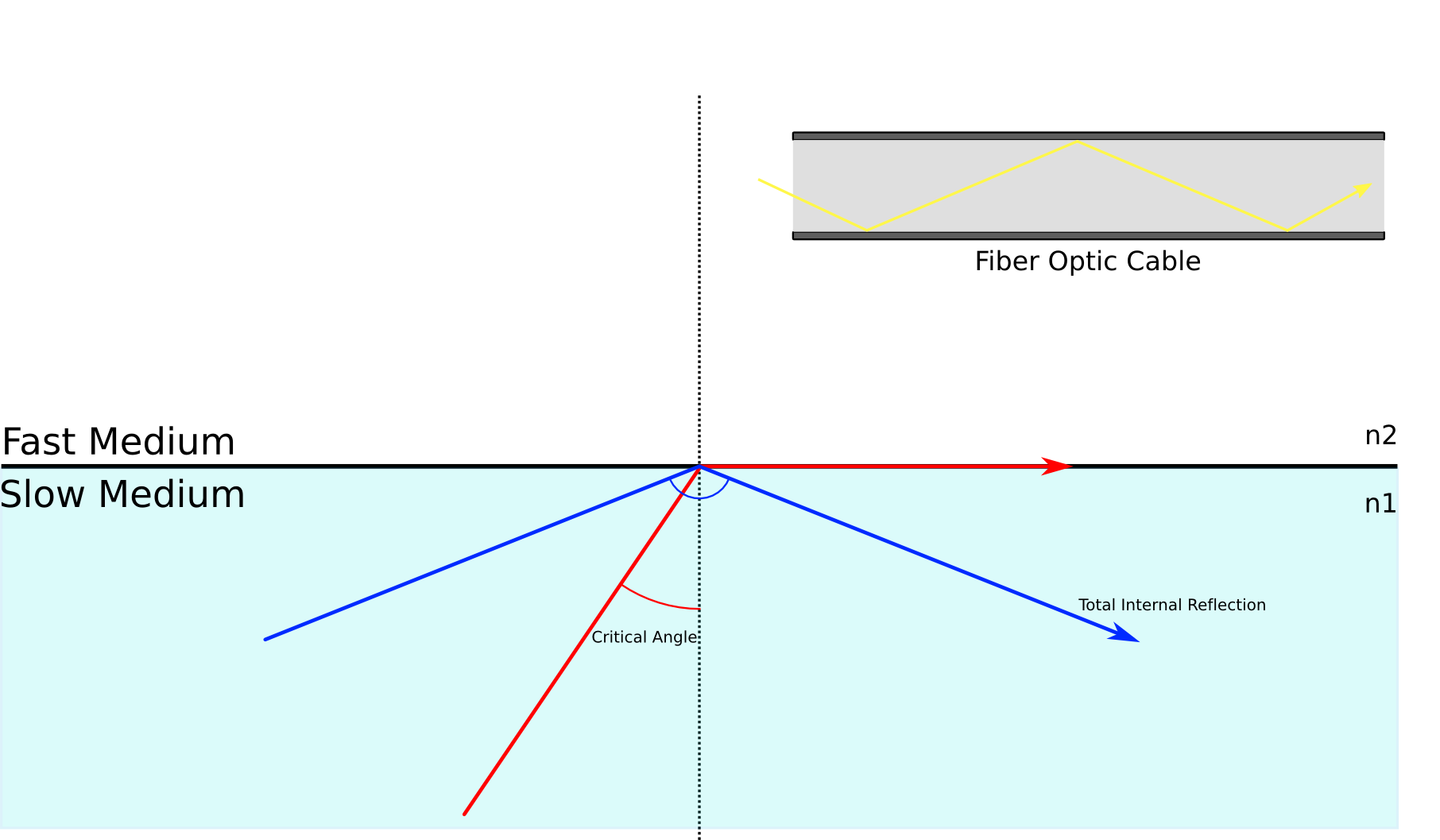
To determine the critical angle for diamond, we just need to solve Snell’s law with the indices of refraction for air and diamond:

The values of n for air and diamond:


In our equation, we want to set the angle of the outgoing light to 90 degrees, since we want that ray to be along the surface of the diamond/air interface. Then, our equation becomes:

Solving for the last remaining angle,

So, the critical angle for light traveling from diamond to air is a little under 25 degrees. Diamonds are cut in such a way that they collect light from any angle hitting the top of the stone, and bounce it around inside to reflect that light straight back to the eye. By cutting the facets of diamonds to ensure that that the incident light will reach the internal surfaces of the diamond at angles greater than the critical angle, light becomes trapped inside the diamond and continues to reflect internally until it reaches a facet it can escape from.

Now, any light coming into the diamond’s face comes right back to the viewer, and it shines as if all of the light were coming from inside it. Combined with it’s ability to split white light into component colored light waves (referred to as “fire”, but that’s another blog post), this creates something that is…well…pretty shiny.
 The Physics Behind
